

Battery Chargers are essential components in many electrical, automotive, industrial, and energy-storage systems. They are designed to supply electrical energy to a rechargeable battery in a controlled manner, helping restore the battery's stored energy while maintaining safe charging conditions.
However, battery chargers are not one-size-fits-all products. Different batteries, applications, charging requirements, and operating environments require different charger designs. Understanding the main types of battery chargers can help engineers, system integrators, and purchasing teams select a suitable solution for their equipment.
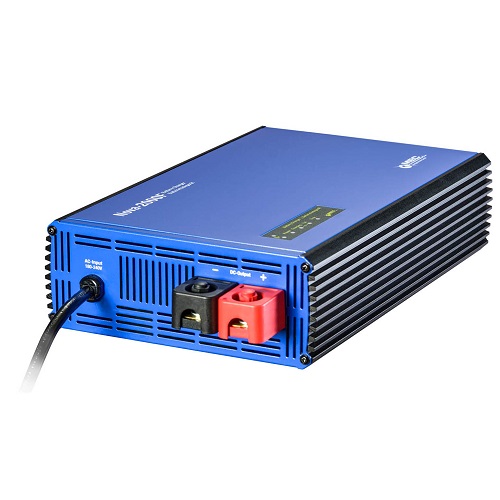
What Is a Battery Charger?
A battery charger is an electrical device that converts available power into the appropriate voltage and current required to charge a rechargeable battery.
A charger typically controls charging voltage, current, temperature, and charging stages to help protect the battery and improve charging performance. Depending on the design, a battery charger may also include protections against overvoltage, overcurrent, short circuits, overheating, and reverse polarity.
The appropriate charger depends on factors such as battery chemistry, nominal voltage, capacity, charging current, application, installation environment, and required charging time.
1. Linear Battery Chargers
Linear battery chargers use a relatively simple charging architecture in which excess voltage is regulated through a linear control circuit.
One advantage of this design is its simplicity and relatively low electrical noise. Linear chargers can be suitable for low-power applications where charging efficiency and heat generation are manageable.
However, linear charging can generate more heat than switching-based designs when there is a significant difference between input and battery voltage. For this reason, they are generally more appropriate for lower-power applications.
2. Switching Battery Chargers
Switching battery chargers use high-frequency switching circuits to regulate and convert electrical energy efficiently.
Compared with traditional linear designs, switching chargers can achieve higher efficiency and are generally better suited to applications requiring higher charging power.
Common advantages include:
High conversion efficiency
Compact design
Lower heat generation
Wide input voltage compatibility
Suitability for higher-power applications
Switching technology is widely used in modern industrial battery chargers and power conversion systems.
3. AC-DC Battery Chargers
An AC-DC battery charger converts AC input power from the electrical grid into the DC voltage and current required by a rechargeable battery.
This type of charger is common in industrial equipment, backup power systems, battery storage systems, and various commercial applications.
When selecting an AC-DC charger, buyers should consider the AC input voltage range, DC output voltage, charging current, efficiency, protection functions, and compatibility with the target battery.
4. DC-DC Battery Chargers
DC-DC battery chargers convert one DC voltage level into another suitable voltage and current for charging a battery.
They are useful when the available power source is already DC, such as a vehicle electrical system, solar system, auxiliary battery, or other DC power source.
DC-DC chargers can also be used to manage charging between different battery systems or voltage levels.
5. Smart Battery Chargers
Smart battery chargers use electronic control systems to monitor battery conditions and adjust the charging process accordingly.
Depending on the charger design, smart charging systems may monitor voltage, current, temperature, charging time, and battery status.
A smart charger may use multiple charging stages, such as bulk charging, absorption, and float charging, depending on the battery chemistry and application.
These chargers can help optimize charging performance while reducing the risk of overcharging.
6. Fast Battery Chargers
Fast battery chargers are designed to deliver higher charging power so that batteries can reach the required state of charge in less time.
Fast charging is useful in applications where equipment needs to return to operation quickly. However, charging speed must be matched to the battery's specifications.
Simply increasing charging current is not always appropriate. Excessive charging current can increase heat generation and may shorten battery life or create safety concerns if the battery is not designed for high-rate charging.
7. Trickle Chargers
Trickle chargers provide a relatively low charging current over an extended period. They are commonly used when a battery needs to remain charged during long periods of inactivity.
Typical applications include vehicle batteries, backup equipment, seasonal machinery, and other systems where batteries may remain unused for extended periods.
Some modern chargers use intelligent maintenance modes rather than continuously applying a fixed low current.
8. Float Battery Chargers
Float chargers are designed to maintain a battery at an appropriate charge level after the main charging process has been completed.
They are commonly used in standby and backup power applications where the battery must remain ready for use.
Typical applications include:
Telecommunication systems
Emergency power systems
Uninterruptible power supplies
Industrial control systems
Backup battery systems
The charger continuously maintains the battery at a suitable voltage while limiting unnecessary charging stress.
9. Fan-cooled Battery Chargers
Fan-cooled Battery Chargers use forced-air cooling to remove heat generated by power electronics during operation.
This cooling method can be useful for higher-power chargers where passive cooling alone may not provide sufficient thermal management.
Fan cooling can allow a charger to maintain stable operating temperatures while supporting higher power density. However, buyers should also consider fan noise, airflow requirements, dust accumulation, and maintenance when selecting a fan-cooled design.
For industrial applications requiring continuous or high-power charging, a properly designed Fan-cooled Battery Charger can provide an effective balance between power capacity and thermal management.
10. Solar Battery Chargers
Solar battery chargers use photovoltaic energy as the primary power source for charging batteries.
Depending on the system architecture, solar charging systems may incorporate charge controllers such as PWM or MPPT technology to manage the energy delivered from solar panels to the battery.
Solar battery charging is commonly used in off-grid systems, outdoor equipment, telecommunications, remote monitoring systems, and renewable energy installations.
How Do You Choose the Right Type of Battery Charger?
With so many charger designs available, choosing the correct one starts with understanding the battery and application requirements.
Consider the following factors before purchasing:
Battery chemistry: Determine whether the battery is lithium-ion, lead-acid, LiFePO4, NiMH, or another chemistry.
Battery voltage: The charger output voltage must be compatible with the battery system.
Battery capacity: Capacity affects the appropriate charging current and charging time.
Charging current: Select a current appropriate for the battery manufacturer's specifications.
Input power: Check whether the available power source is AC or DC.
Charging speed: Determine whether standard, maintenance, or fast charging is required.
Cooling: High-power applications may require fan-cooled or other active thermal management.
Operating environment: Consider temperature, humidity, dust, vibration, and installation conditions.
Protection functions: Look for appropriate overvoltage, overcurrent, short-circuit, and thermal protection.
Communication: Smart industrial systems may require CAN, RS485, or other communication interfaces.
Battery Charger Types at a Glance
| Charger Type | Main Feature | Typical Applications |
|---|---|---|
| Linear Charger | Simple design and low noise | Low-power electronics |
| Switching Charger | High efficiency and compact design | Industrial and commercial systems |
| AC-DC Charger | Converts AC to DC | Industrial and grid-powered systems |
| DC-DC Charger | Converts DC voltage levels | Vehicles and DC systems |
| Smart Charger | Automatic charging management | Advanced battery systems |
| Fast Charger | High charging power | High-utilization equipment |
| Trickle Charger | Low-current maintenance charging | Long-term battery storage |
| Float Charger | Maintains battery charge | Backup power systems |
| Fan-Cooled Charger | Forced-air thermal management | High-power industrial systems |
| Solar Charger | Uses solar energy | Off-grid and renewable systems |
FAQ
1. What is the most common type of battery charger?
Switching-based battery chargers are widely used because they can provide high efficiency, compact designs, and flexible voltage and current control. The best type still depends on the battery and application.
2. What is the difference between a smart charger and a standard battery charger?
A smart charger can monitor battery conditions and automatically adjust the charging process, while a basic charger may provide a more fixed charging output with fewer monitoring functions.
3. Are fan-cooled battery chargers suitable for industrial applications?
Yes. Fan-cooled chargers can be suitable for higher-power industrial applications because forced-air cooling helps remove heat from power electronics during continuous operation.
4. How do I choose the correct battery charger?
Start with the battery chemistry, voltage, capacity, recommended charging current, input power source, charging speed, operating environment, and required protection features.
5. Can one battery charger charge different battery types?
Not necessarily. Different battery chemistries have different charging requirements. Always confirm that the charger's voltage, current, charging profile, and control method are compatible with the specific battery.
There are many types of battery chargers, including linear, switching, AC-DC, DC-DC, smart, fast, trickle, float, fan-cooled, and solar chargers. Each type is designed to address different power, charging, thermal management, and application requirements.
For industrial buyers, selecting a charger should start with the battery specifications and operating environment rather than simply choosing the highest charging power. Voltage, current, battery chemistry, cooling method, protection functions, efficiency, and required charging speed should all be evaluated together.
If you are sourcing an industrial battery charger or a customized charging solution, working with an experienced manufacturer can help you select the appropriate charger architecture and configuration for your application.